Last updated: September 14, 2026
Product placement in retail stores is the strategic positioning of products on shelves, displays, and throughout the store layout to attract customer attention, influence purchasing decisions, and increase sales. A competent planogram in a supermarket can draw attention to key products, encourage spontaneous purchases and build loyalty to the store. At the same time, in growing retail chains it is important to effectively use the limited space, while maintaining convenience for customers.
How the Product Placement in the Store Affects Sales
The arrangement of goods on the shelves directly affects the customer's decision to buy. Properly organized store space provides these benefits:
Increase in the Average Receipt
A quality planogram encourages the customer to make additional purchases. This is the essence of cross-merchandising — placing complementary items next to each other so their use together feels natural. Companion items - ketchup next to chips or coffee pods next to coffee machines - reinforce mutual consumption and increase the average receipt.
In addition, placing impulse items (chocolates, chewing gum) near the cash register helps capitalize on customers' spontaneous decisions. Checkout-lane placement is one of the most reliable cross-merchandising zones in any store, since customers are already in a buying mindset when they reach it.
Efficient Use of Space
Proper product placement in stores allows you to maximize the use of retail space. For example, goods with high margins or those that bring additional income, should be at eye level of the buyer. Supermarkets often use the methodology of "golden shelf" — places located at a height of 120-160 cm, where the goods are best visible and sold more actively. Placing high-margin products in this zone is backed by field research: a landmark 1994 study on in-store product placement by Drèze, Hoch, and Purk, published in the Journal of Retailing, found that shelf location had a significantly larger impact on unit sales than the number of facings allocated to a product, which is why "eye level is buy level" has become one of the most repeated rules in retail merchandising.
For growing stores, it is especially important to organize the space so that every square meter works for profit. Skillful use of planograms helps to avoid chaotic layout and makes it logical and attractive for customers.
Customer Satisfaction
Efficient product placement makes it easier to find the right products, which makes shopping more convenient. Logical grouping of products by category or frequency of use helps the customer to navigate through the assortment more quickly. Thoughtful grocery store product placement — for example, keeping dairy products together and placing eggs and butter next to each other — makes shopping intuitive.
When a customer finds everything they need without too much effort, they are more likely to return to the store again.
Increased Competitiveness
A well-designed store with a well thought-out layout doesn't just attract more customers — it directly shapes how shoppers perceive the brand before they read a single price tag. Consistent, clutter-free shelves signal reliability, while a confusing or messy layout pushes customers toward competitors who make shopping easier. In competitive categories like grocery and convenience retail, where product assortments often overlap between neighboring stores, the quality of the in-store experience — clear navigation, tidy shelves, logical zoning — becomes one of the few differentiators a retailer fully controls.
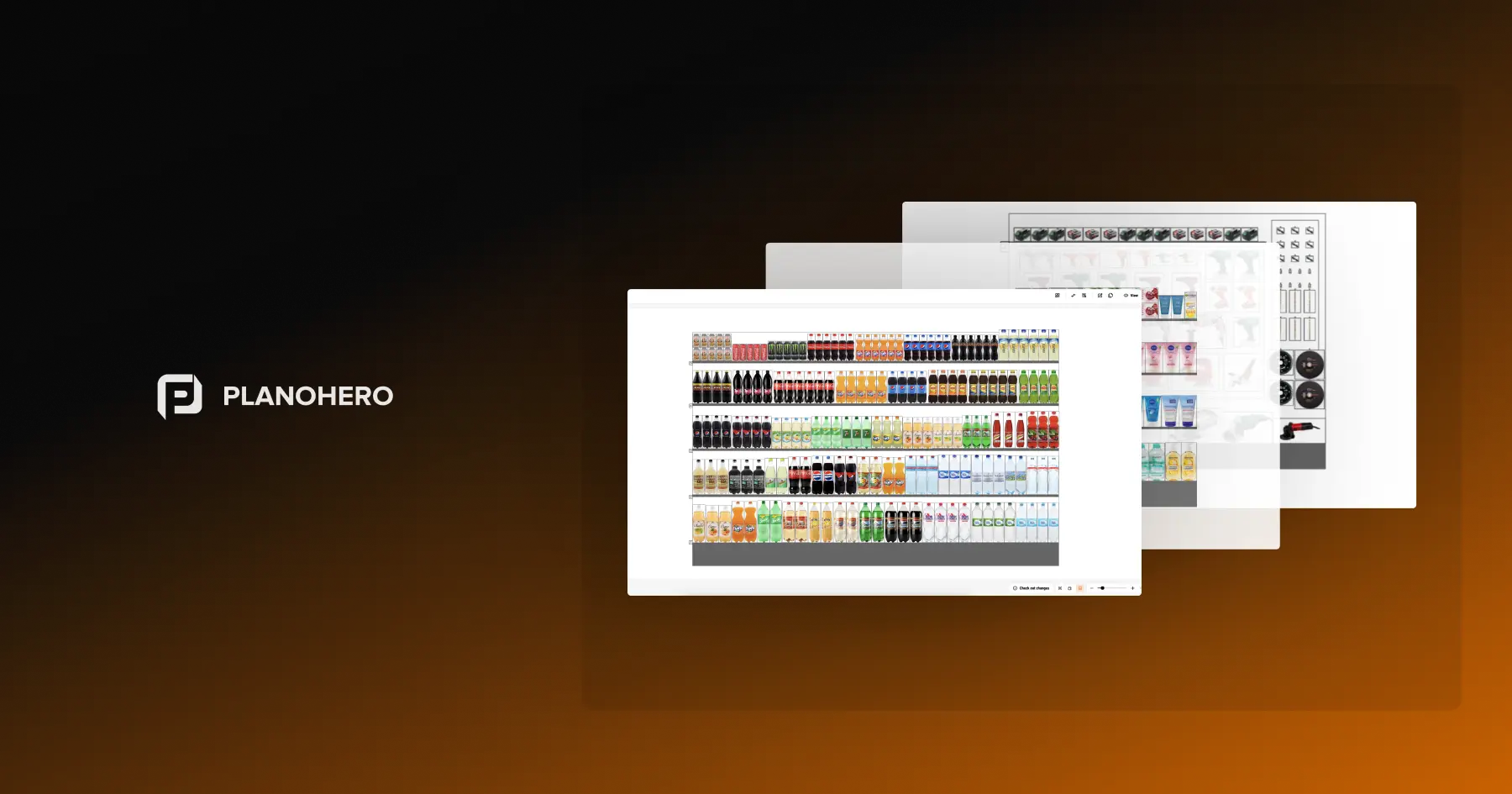
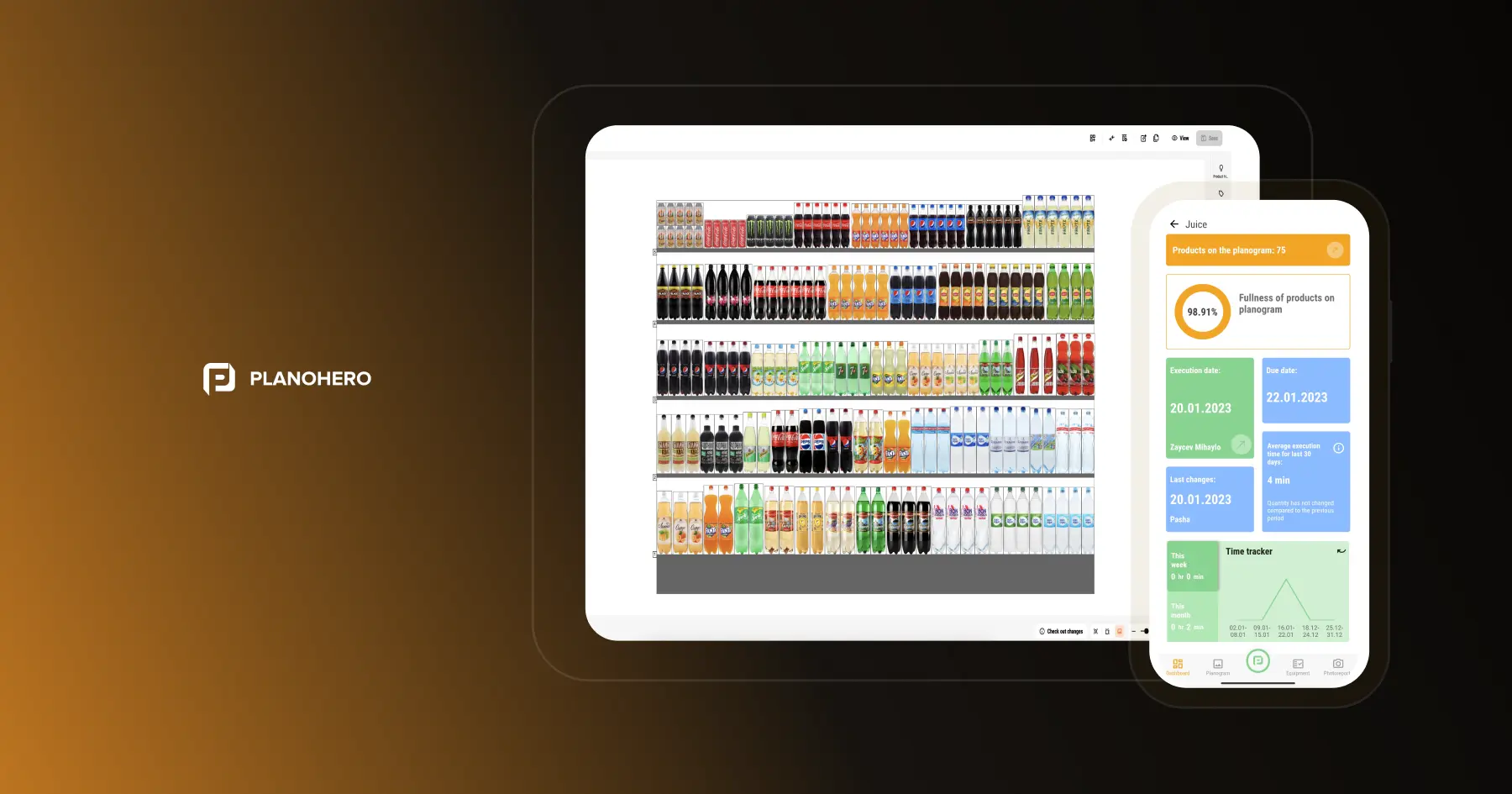
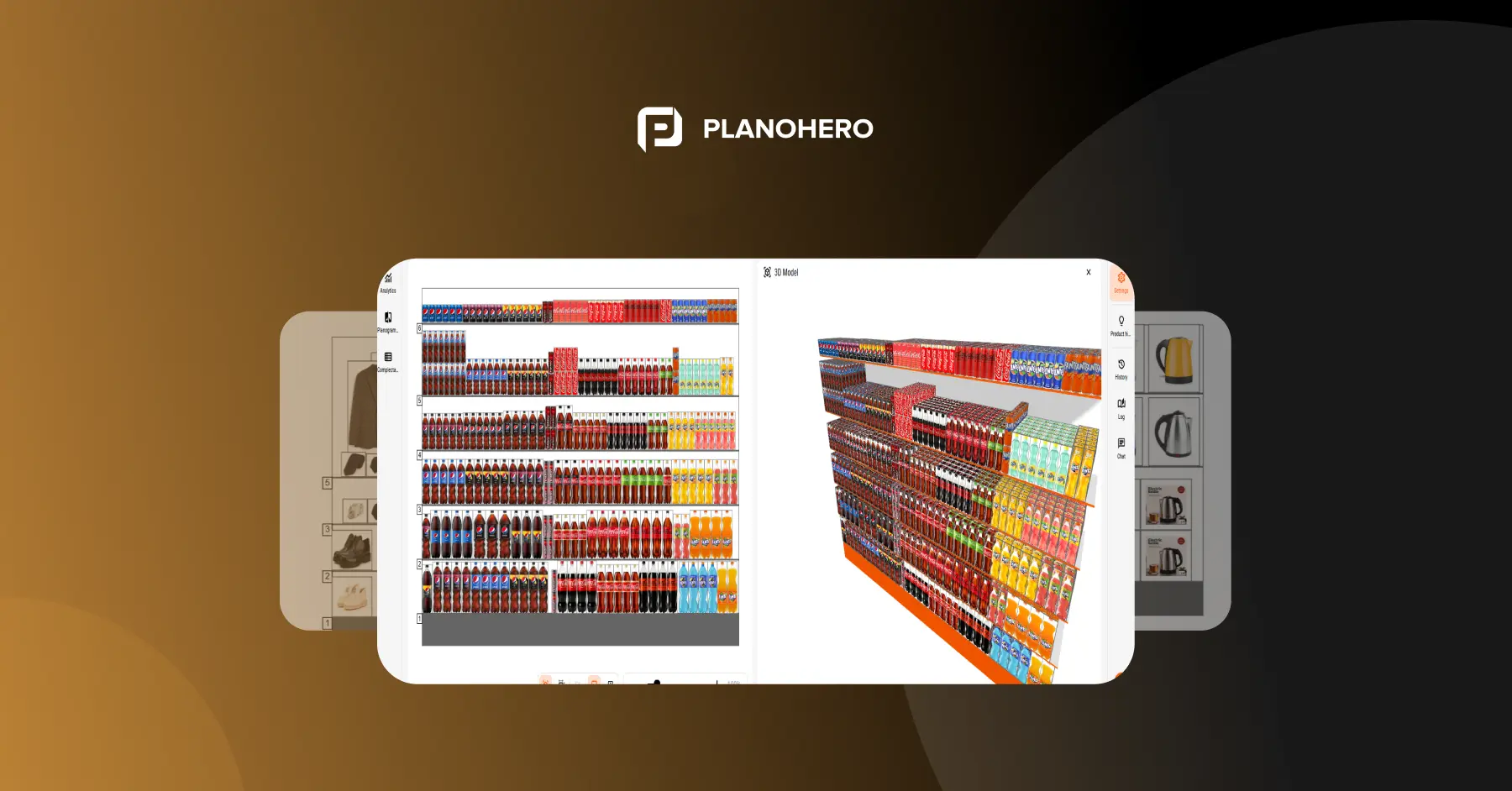
The use of modern layout planning tools such as PlanoHero allows retailers to automate the process of retail product placement in stores, reduce the likelihood of errors and implement changes quickly. These solutions help to achieve the optimal balance between the visual appeal of the store and the efficiency of sales.
Retail Product Placement Rules for Supermarkets and Grocery Stores
Once you understand why product placement drives sales, the next step is applying it in practice. Below are the core rules that translate those benefits into a working store layout:
Assortment Optimization
Variety is an incentive to buy. However, it is important not only to offer a wide choice, but also to present it correctly. Similar products from different brands can be arranged in blocks, which creates orderliness and helps to avoid the "clutter" effect.
Block layout is an effective method, when products of the same category are combined into large visual segments. This allows the customer to quickly compare options and choose the right one. A tool for creating blocks on the planogram is available in the PlanoHero service. It allows you to customize the layout in each individual block, adapting it to the needs of the business.
Prioritization
High margin or novelty products should occupy strategic locations such as eye level or the entrance area. This allows you to grab the attention of customers quickly.
In addition, there is a successful tactic of placing economical options next to expensive branded items (the "locomotive" principle). This encourages shoppers to pay attention to both categories. A common real-world example is store-brand items placed directly beside a leading national brand at eye level — shoppers naturally compare the two, and the price difference often nudges them toward the private label.
Systematicity
The logic of category arrangement plays a key role. Grouping products into thematic areas or directions helps shoppers find what they need faster. This is especially important in large supermarkets, where shoppers tend to choose stores for their convenience and thoughtfulness.
Displaying Prices and Promotions
The price tag is not only information, but also an important sales tool. It should be clear, contrasting and located at the level of the buyer's gaze.
Promotional goods are highlighted with special labels or colored frames. This visually attracts attention and encourages impulse buying.
Visibility
Buyers' eyes are always drawn to goods that are clearly visible and within reach. Essential products such as milk, bread and water are most often placed at eye level or slightly below.
The Impact of Layout on Customer Behavior
Thoughtful layout in a supermarket can control the customer's journey. Popular products are often placed at the back of the aisle, forcing the customer to go through all sections. This increases the chances of buying related products.
The golden triangle is the key areas that a customer is sure to pass through: the entrance, the main showcase with popular products and the cash register. Expanding the distances between these points encourages the customer to explore the assortment.
Types of Product Placement In Stores
There are several popular ways of retail product placement, each of which has its own advantages and features:
- Vertical. Goods of one category are placed along the entire height of the rack. This method helps to visually separate groups of products and attracts attention.
- Horizontal. Products are placed in a line along one shelf. This is convenient for goods that are often bought together (for example, pasta and sauces).
- Bulk. Products are displayed in large volumes (on pallets or in baskets) to draw attention to promotional or seasonal items.
- Floorstanding. Special racks and stands are placed in the central aisles, at the cash registers, enlivening the space.
- Display. The use of special displays, stands or stands. Ideal for the presentation of novelties, premium products or goods with unique packaging design.
- Endcap. Products placed at the end of an aisle, facing the main walkway. Endcap displays are some of the most visible spots in a store and are typically reserved for promotions, seasonal items, or new product launches, since foot traffic passes them even without entering the aisle.
Attention is also paid to the so-called dead zones - places where customers rarely look. To activate them, signs, illumination and special promotional displays are used.
Placement Tactics Beyond the Core Types
The types above describe where products physically sit. These three tactics work alongside them, layered on top of any type, to shape how products get noticed and paired:
| Tactic | Best For | Main Goal | Example |
|---|---|---|---|
| Block | Brand/category recognition | Create strong visual grouping | All cereal brands together |
| Cross-merchandising | Basket growth | Encourage complementary purchases | Chips + dips |
| Eye-level | High-priority products | Maximize visibility | High-margin SKU |
How to Use Shelving Effectively?
Racks are the backbone of any retail store. They provide order, availability of goods and set the general tone of perception of the store.
First of all, they should be convenient for both customers and staff. The height of the shelves plays a key role: the lower shelves should be accessible without the need to bend down, and the upper shelves should be no higher than the level of an outstretched arm. In addition, it is important to consider the strength and stability of the design, because supermarkets work with a lot of products, often heavy and bulky.
The aesthetic aspect is also important. Modern buyers appreciate visual comfort. Racks should be neat, clean, with even shelves. White or light colors reflect light better, creating a feeling of spaciousness.
Using Color as a Placement Signal
Inside a planogram, color isn't decoration — it's information. When products of the same category sit together, they naturally form a color block: a wall of red tomato sauces, a run of green cleaning bottles, a shelf of blue-labeled dairy. Shoppers read these blocks almost like signage, scanning for the right color mass before they even focus on individual labels. This is why block layout (covered above) works so well for sufficiency of assortment — it turns color into a navigation shortcut.
That same logic decides how well a promotional highlight performs. A colored shelf strip or price frame only stands out if it breaks the dominant palette of that specific aisle — the same red accent that pops on a shelf of green packaging disappears completely on a shelf that's already red. This means promotional color can't be planned store-wide; it has to be planned against the actual product mix sitting on that shelf.
The practical takeaway for planogram building: treat color the same way you treat shelf height or block width — as a placement variable. Use it to reinforce category grouping, and reserve strong contrast sparingly, for genuine standouts like a new arrival or an endcap promotion, rather than applying the same accent color across every shelf in the store.
Common Mistakes in Product Placement
Even a well-planned layout can lose effectiveness if these common mistakes go unchecked:
- Overcrowded shelves. Packing too many SKUs into one block creates visual clutter and makes it harder for shoppers to find what they need — the opposite of the "sufficiency of assortment" principle above.
- Ignoring cross-merchandising opportunities. Selling complementary items in separate, unrelated aisles means missing an easy chance to increase basket size.
- Static layouts that never change. A planogram that isn't updated for seasonal shifts or new promotions quickly becomes outdated and stops reflecting real customer demand.
- Underusing endcap and dead-zone space. These high-visibility (or hard-to-reach) areas are often left with low-priority products instead of being used strategically for promotions or high-margin items.
- Inconsistent execution across stores. A planogram designed correctly at head office is only effective if it's implemented the same way on the shop floor in every location — a common gap in growing retail chains. A 2024 industry report cited by Chain Store Age found that 93% of retailers struggle with planogram compliance, and only a minority have real visibility into whether layouts are actually followed on the floor.
Looking for a service to create planograms?
The PlanoHero planogram software helps retailers optimize product placement in stores based on sales analytics and consumer behavior — from building the first planogram to keeping execution consistent across every location.
A Checklist for Retailers: Evaluating the Layout Efficiency
FAQ: Product Placement In Retail Stores
What is product placement in a retail store?
Product placement in a retail store is the strategic positioning of products on shelves, displays, and throughout the store layout to maximize visibility, guide customer behavior, and increase sales.
Why is product placement important in retail?
It directly affects how easily customers find products, how many items they buy per visit, and how they perceive the store overall. Well-planned placement increases the average receipt, improves customer satisfaction, and helps retailers use limited shelf space more efficiently.
What are the main types of product placement?
The most common types are vertical, horizontal, bulk, floorstanding, display, and endcap placement. Each type serves a different goal, from visually separating categories to maximizing exposure for promotions.
What does "eye level is buy level" mean?
It's the principle that products placed at a shopper's natural eye level — roughly the "golden shelf" zone of 120-160 cm — get noticed and picked up more often than items on the top or bottom shelves, making this zone ideal for high-margin or priority products.
What is cross-merchandising?
Cross-merchandising is placing complementary products near each other — like chips next to dips, or coffee pods next to coffee machines — to encourage customers to buy related items together and increase the average receipt.
How does a planogram help with product placement?
A planogram is a visual model that shows exactly where each product should sit on the shelf. It keeps layout consistent across store locations, reduces manual errors, and makes it easier to adjust placement based on sales data.
Getting all of this right by hand across dozens of shelves — and keeping it consistent across every store in a growing chain — is where most retailers start looking for a systematic way to manage it.
Looking for a service to create planograms?
Try a free demo version of PlanoHero