
Last updated: September 19, 2026
A product can have the best packaging, the sharpest pricing, and a flawless marketing plan — and still underperform if it never actually ends up on the shelf the way it was supposed to. That gap, between what headquarters planned and what a shopper actually sees in the aisle, is what in-store execution (also known as retail execution) is meant to close.
What Is In-Store Execution (Retail Execution)?
In-store execution — also called retail execution or store execution — is the process of turning a retailer's plans into what actually happens on the shelf: getting pricing, promotions, planograms, and visual merchandising out of the strategy deck and onto the sales floor, exactly as intended.
Effective execution ensures that:
- Products are placed according to planograms and strategic zones.
- Shelves are consistently stocked and replenished.
- Promotions are installed correctly with endcaps, wobblers, or digital screens.
- Prices are accurate and updated in real time.
- Stores remain clean, organized, and visually appealing.
Skip any of this consistently, and even a well-funded campaign can quietly fail. Picture a brand investing millions into a summer promotion, only to find that a large share of stores never set up the displays as planned. The result is wasted investment, lost sales, and damaged trust.
Why Does In-Store Execution Matter?
Even as e-commerce grows, physical retail stores remain a critical touchpoint for consumers. Research consistently shows that most purchasing decisions, especially impulse buys, still happen in-store. This makes execution not just important but essential.
The purpose of retail execution is simple: to make sure the price, promotion, and product placement a shopper was promised are the ones they actually find on the shelf.
The clearest way to see why it matters is to look at what's at stake when execution slips. A missed endcap install means a promotion that never gets seen. A stockout on a full backroom means a sale that walks out the door. A pricing error caught at checkout means a shopper who doesn't come back. None of these are strategy failures — the plan was right. They're execution failures.
Industries like FMCG, beverages, personal care, and consumer durables rely heavily on flawless in-store execution to drive volume. From securing endcap visibility for a new snack brand to ensuring demo setups for electronics, execution determines whether strategy turns into revenue.
Core Components of an In-Store Execution Program
Strong in-store execution isn't one task — it's several activities that all have to hold up at once.
| Component | Why It Matters |
|---|---|
| Planogram compliance | Determines whether products get the visibility and accessibility the plan intended |
| Shelf stocking & inventory | Availability is what turns demand into an actual sale |
| Promotional & POS displays | Shapes the shopper journey and triggers impulse buys |
| Pricing accuracy | Protects margins and shopper trust at the same time |
| Store hygiene & layout | Sets the baseline experience everything else is judged against |
| Staff training | Determines whether the plan gets followed consistently or interpreted loosely |
| Audits & compliance tracking | Catches gaps in the other six before they become lost sales |
Each is covered in more detail below.
1. Planogram Compliance
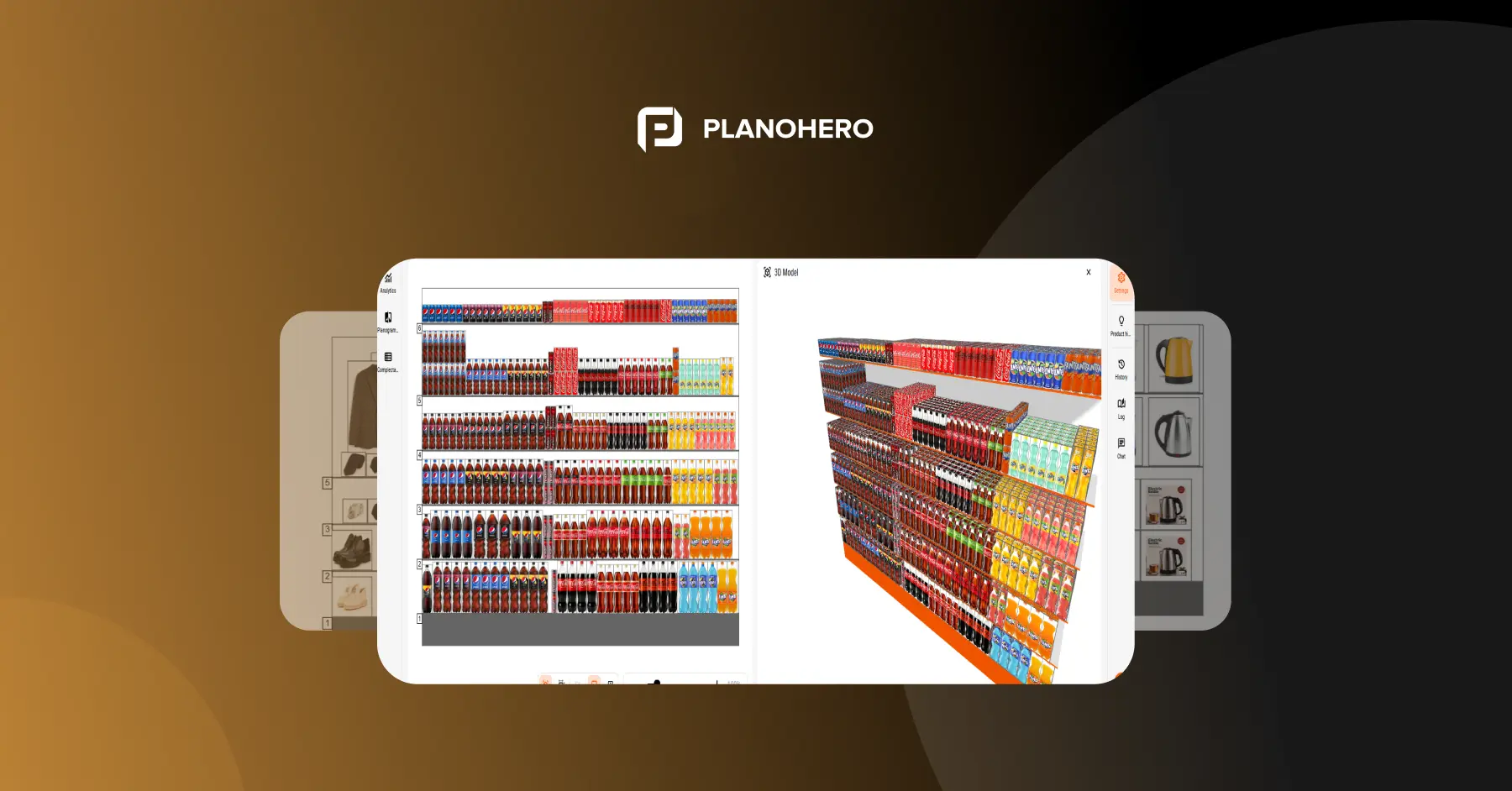
A planogram is a visual blueprint of product placement on shelves. Ensuring compliance means products are arranged for visibility, accessibility, and sales impact. Eye-level placement for fast movers, strategic adjacencies for cross-selling, and seasonal resets all fall under this critical task.
2. Shelf Stocking & Inventory Control
Availability is non-negotiable. Stockouts are the number one reason for lost sales, with many consumers switching brands after just a few disappointments. But overstocking can be equally damaging, leading to waste and reduced margins. A balanced replenishment system informed by demand forecasting is the foundation of successful execution.
3. Promotional & POS Displays
Endcaps, gondolas, danglers, digital screens, and interactive in-store merchandising setups capture attention and drive engagement. These displays are not only about aesthetics — they shape the shopper journey and trigger impulse buys.
4. Pricing Accuracy
Pricing errors erode trust quickly. Accurate, real-time price updates aligned with promotions ensure customers receive the value they expect, while also protecting margins.
5. Store Hygiene & Layout
A cluttered or poorly lit store can ruin the consumer journey. Execution must extend to store cleanliness, signage clarity, and logical layout design that makes browsing easy.
6. Training & Staff Enablement
Promoters and store managers are the front line of execution. Training them on product USPs, seasonal promotions, and customer engagement techniques ensures a more persuasive in-store strategy.
7. Audits & Compliance Tracking
Regular audits and compliance checks identify gaps before they escalate. From verifying planogram adherence to reviewing competitor activity, audits provide the insight needed for continuous improvement.
Benefits of Successful In-Store Execution
When retail execution is done right, it shows up directly in how the store performs:
- Greater visibility – Products stand out and attract shopper attention.
- Higher sales – Convenience and accessibility translate into faster offtake.
- Stock availability – Consumers can always find what they need.
- Consistent brand experience – Every store follows the same merchandising standards, so shoppers get the same experience in every location.
- Brand awareness – Sampling stations, displays, and consistent messaging strengthen recall.
- Cross-selling opportunities – Smart adjacencies (e.g., chips next to soda) increase basket size.
- Customer loyalty – Memorable in-store experiences build emotional connections.
Each of these traces back to the same shelf-level decisions covered above — execution is what turns a good plan into a good outcome.
Common Retail Execution Challenges
Retail execution breaks down in a handful of predictable ways:
- Non-compliance with planograms.
- Delayed or broken display installations.
- Stockouts despite full backrooms.
- Inconsistent promotions — the same campaign looks different, or doesn't run at all, from one store to the next.
- Expired or outdated products left on the shelf.
- Manual, disconnected processes — when instructions travel through emails, spreadsheets, and phone calls, every store interprets the plan a little differently.
- Lack of real-time visibility for headquarters.
Without a system for catching these gaps, brands typically don't find out about them until sales data reveals the damage — well after the promotion or reset has already run its course. This is the same execution drift covered in more depth in why planogram maintenance matters — the plan goes stale, or the shelf stops matching it, and nobody notices until it costs money.
Retail Execution Strategy: Best Practices for Strong Results
- Clear Digital Guidance – Store teams need simple, visual instructions delivered digitally so setups happen correctly and on time.
- Proof of Compliance – Photos or digital checklists ensure displays, shelves, and prices match the plan.
- Motivated Staff – Incentives like rewards or recognition help frontline employees prioritize execution quality.
- Regular Audits – Spot checks and compliance reviews maintain long-term standards and reveal gaps.
- HQ–Store Alignment – Store managers and field teams work toward the same corporate goals, with one shared source of instructions and a clear feedback loop.
- Data-Based Prioritization – Focus more effort on high-impact stores while streamlining smaller ones.
- Customer Feedback – Shopper insights highlight if displays are visible, easy to find, and effective.
- Analytics for Optimization – Using execution data helps refine layouts, promotions, and overall in-store strategy.
How PlanoHero Supports In-Store Execution: A Mobile Retail Execution Solution
Every gap described above — a planogram nobody followed, a display that went up two weeks late, a stockout headquarters didn't know about until the sales report — comes down to the same root problem: no one closer to the shelf could see what the plan actually said, and no one at headquarters could see what actually happened.
That's the specific gap PlanoHero is built to close. Together with the PlanoHero Layout app, it works as a mobile retail execution solution that connects headquarters and store teams in real time:
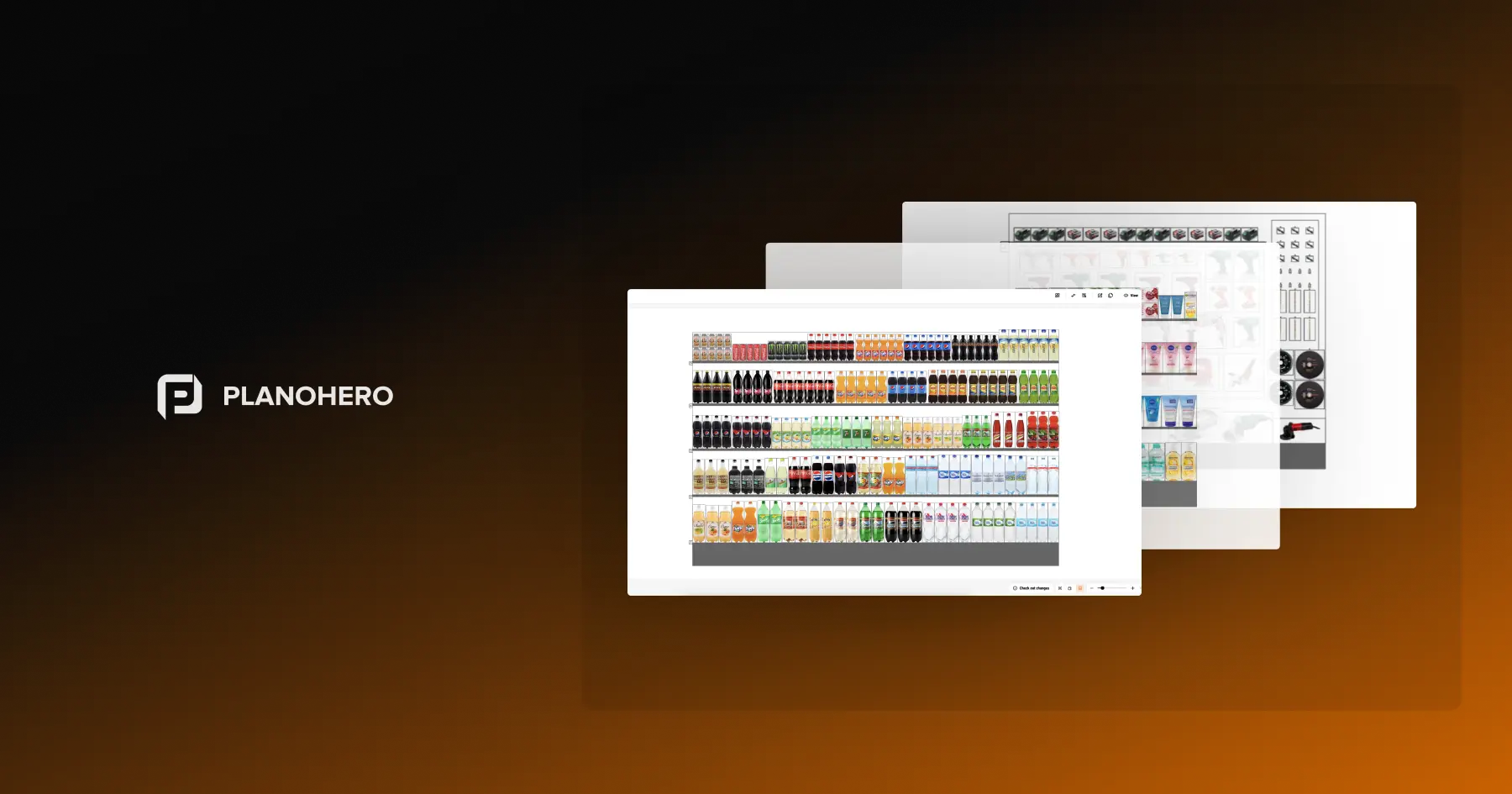
- Planogram creation and distribution. Retailers build planograms in PlanoHero and send them digitally to all stores at once.
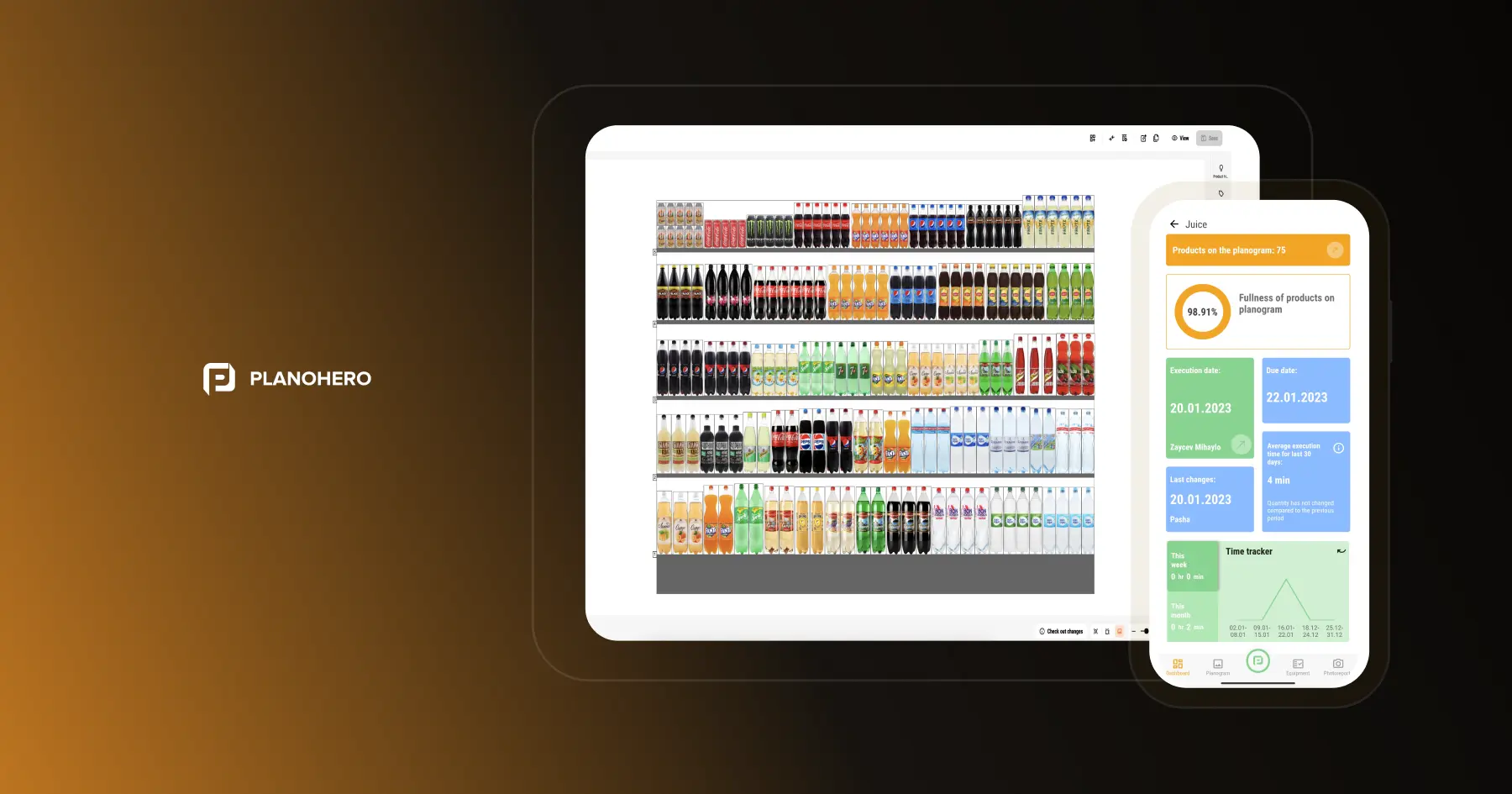
- Instant notifications. Store managers get a notification in the Layout app as soon as a new planogram or task is available, so no one works from an outdated plan.
- Step-by-step implementation. Store staff open the planogram in the app and follow detailed instructions to set up the shelf, which removes guesswork and keeps every store on the same layout.
- Photo reporting and verification. After the reset, the store team sends photo reports through the app. Head office checks compliance and sends feedback for corrections.
What this changes for retailers:
- Faster rollout. Planograms reach stores instantly, so resets and promotions go live on schedule.
- Proof, not assumptions. Compliance is confirmed with photo evidence rather than a manager's word.
- Real-time visibility for headquarters. Category managers see execution gaps store by store as they happen, instead of waiting for the next sales cycle to reveal a problem.
- Clearer communication. Tasks, instructions, and feedback live in one place instead of scattered email threads, which means fewer errors between head office and stores.
- One system instead of several. Planogram creation, distribution, and compliance tracking live in the same platform, so execution doesn't depend on stitching together spreadsheets, photos, and emails by hand.
For chains managing execution across a large or growing store network, this is also where Retail Merchandising Software as a category becomes relevant — it's built specifically for coordinating this kind of plan-to-shelf consistency at scale.
What's Next for Retail Execution
As retail keeps blending online convenience with in-store engagement, execution itself is shifting from a manual, after-the-fact check to something tracked continuously: AI-assisted demand and placement decisions, interactive displays that respond to shoppers in real time, and mobile tools that give store teams live guidance instead of a printed plan to interpret on their own.
The core idea doesn't change, though: a plan only matters once it's actually on the shelf. Everything covered here — the components, the common failure points, the practices, the software — exists to keep that translation from plan to shelf as tight as possible.
FAQ
What's the difference between in-store execution and retail execution?
There is none. In-store execution and retail execution are two names for the same thing: how a retailer's plans get carried out on the sales floor. Some vendors and articles favor one term over the other, but there's no meaningful distinction between them.
What is the purpose of retail execution?
The purpose of retail execution is to make sure a retailer's plans — planograms, pricing, promotions, and merchandising standards — actually reach the shelf as intended, in every store. Done well, it delivers consistent brand presentation, better shelf availability, higher sales, and a shopping experience where customers easily find what they need.
What is a mobile retail execution solution?
A mobile retail execution solution is an app that connects headquarters with store teams in real time. Stores receive planograms and tasks on their phones, follow step-by-step instructions, and send back photo reports so head office can verify compliance. The PlanoHero Layout app is an example.
Is in-store execution the same as visual merchandising?
No — visual merchandising is one piece of it, focused specifically on how products look and are arranged on the shelf. In-store execution is the broader process, covering pricing accuracy, stock levels, promotional setup, and compliance tracking alongside the visual side.
How do you measure in-store execution?
Execution is typically measured through compliance rates — the share of stores where the shelf actually matches the planogram — alongside metrics like on-shelf availability, promotional display uptime, and pricing accuracy. Photo-based audits and mobile compliance checks are the most common way to collect this data at scale.
How often should in-store execution be checked?
This overlaps closely with store audit frequency: high-turnover categories and major resets or promotions typically call for more frequent checks, while stable categories can be reviewed less often. The key is catching execution gaps close to when they happen, not months later in the sales numbers.
Do small retailers need in-store execution software, or is it only for large chains?
Manual checks work fine for a single store. The need for software usually shows up as soon as a retailer operates more locations than one person can physically walk through regularly — at that point, tracking compliance without a shared, centralized view starts costing more in missed gaps than the software would cost to run.
Looking for a service to create planograms?
Try a free demo version of PlanoHero